
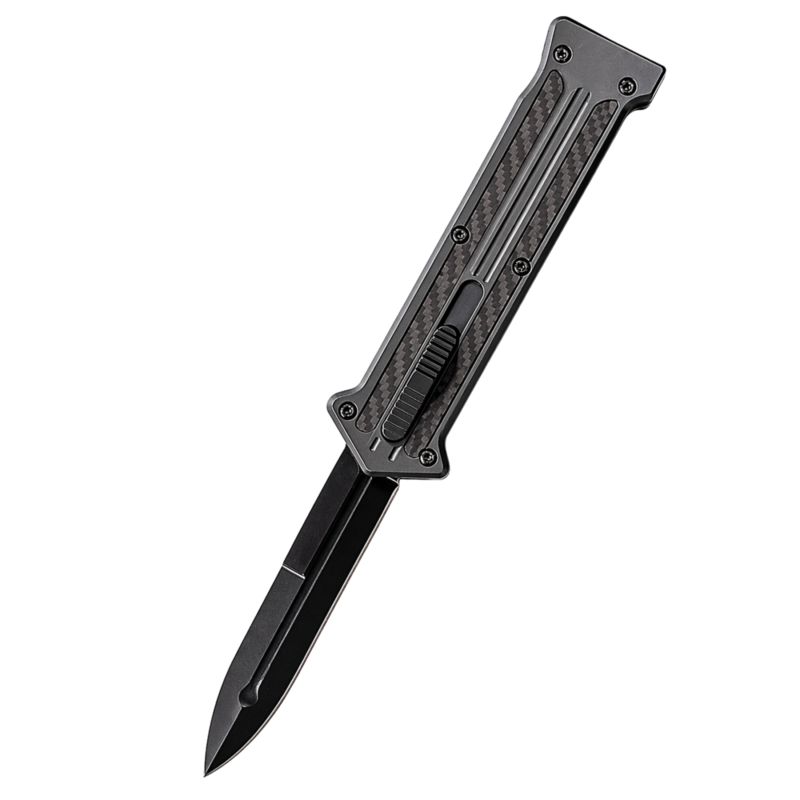
Short answer
Learn what an auto knife is, how it works, key buying factors, safety basics, and what wholesale buyers should look for before sourcing inventory.
Key Takeaways
- Knife rules can vary by state, city, blade style, opening mechanism, carry method, and intended use.
- Do not treat a product nickname as a legal category; check the actual features and local rule.
- Retailers should keep legal or safety language factual and avoid promising that one item is allowed everywhere.
Terms Used Here
- OTF
- Out-the-front; a knife design where the blade moves forward from the front of the handle.
- Automatic knife
- A knife that opens by a spring-driven mechanism after the user activates a button, switch, or slider.
- Folding knife
- A knife with a blade that pivots into the handle for storage.
In this article
- 01 How an auto knife works
- 02 What makes an auto knife different from other folding knives
- 03 Common auto knife styles buyers will see
- 04 Side-opening autos
- 05 Out-the-front knives
- 06 Compact everyday-carry models
- 07 Collector-focused designs
- 08 What to look for when buying an auto knife
- 09 Common mistakes to avoid
- 10 Wholesale sourcing considerations
- 11 Safety, storage, and responsible ownership
- 12 FAQ about auto knives
- 13 Is an auto knife the same as an OTF knife?
- 14 Are auto knives good for everyday carry?
- 15 What is the most important quality to check?
- 16 Why do some buyers prefer wholesale auto knives?
- 17 What should first-time buyers avoid?
An auto knife is a folding knife that opens automatically when the user activates a button, switch, or lever, causing the blade to deploy with a spring or similar mechanism. In plain terms, it is a knife designed for fast one-handed opening, which is why it is popular with collectors, everyday carriers, outdoor users, and retailers looking for fast-moving inventory. If you are shopping for yourself or buying for a store, the most important things to understand are how the knife opens, how it locks, what materials it uses, and what local laws apply.
How an auto knife works
Most auto knives use an internal spring system that pushes the blade open after the release is activated. The mechanism is built into the handle, and the knife locks into place once fully deployed. That locking feature is part of what makes the knife feel solid in use, but it also means quality matters. A well-made auto knife should open cleanly, lock securely, and close without excessive play.
These knives are often compared with manual folders and assisted-opening knives. A manual knife requires the user to open the blade by hand, while an assisted opener needs the user to start the blade moving before the spring helps finish the action. An auto knife does the opening work for you once the release is engaged. That difference is important for shoppers who want quick access and for wholesale buyers who need to explain the product clearly to customers.
What makes an auto knife different from other folding knives
The main difference is the opening mechanism. But from a buyer’s point of view, there are several other differences that matter too:
- Speed: Auto knives open quickly and consistently.
- Convenience: They are easy to operate with one hand.
- Mechanism complexity: The internal spring and release system require good manufacturing quality.
- Customer appeal: Many buyers like them for the combination of utility, novelty, and collection value.
- Regulatory sensitivity: These knives may be restricted in some places, so sellers and buyers should check local rules before purchasing or reselling.
For retailers, that last point matters just as much as blade steel or handle style. A product can be attractive and well made, but if your customers cannot legally own it where they live, it becomes harder to sell responsibly.
Common auto knife styles buyers will see
Auto knives come in several formats, and each one appeals to a different type of buyer. A store owner or distributor should know the main categories because they influence pricing, display, and customer expectations.
Side-opening autos
These open from the side, similar to a traditional folding knife. They are familiar to many users and often come in a wide range of handle materials, blade shapes, and finishes.
Out-the-front knives
OTF knives deploy the blade straight out from the front of the handle. They are often associated with quick deployment and a distinct mechanical feel. If you are stocking inventory, you may want to review the OTF/auto knife wholesale category for examples of the styles customers often ask for.
Compact everyday-carry models
Some auto knives are designed for pocket carry and daily utility, with smaller blades and slim handles. These are often easier to merchandise to first-time buyers who want practicality over size.
Collector-focused designs
These may feature premium finishes, unique handle textures, limited-edition styling, or upgraded blade steels. They can be strong performers for specialty shops, especially when customers want something beyond a basic utility knife.
What to look for when buying an auto knife
If you are choosing an auto knife for personal use, resale, or wholesale purchasing, focus on the features that affect performance and customer satisfaction. The best-looking knife is not always the best seller.
- Blade steel: Stainless steels are common because they balance corrosion resistance and edge retention. Better steels usually cost more, but they can improve long-term value.
- Handle material: Aluminum, stainless steel, and textured composites are common. A good handle should feel secure in the hand and resist wear.
- Lock strength: A solid lockup helps the blade feel stable when open.
- Action consistency: The opening should feel smooth and reliable, not weak or sticky.
- Blade shape: Drop point, tanto, and dagger-style blades each have different looks and practical uses.
- Size and carry comfort: Buyers often want a knife that fits their pocket or display case without feeling oversized.
- Finish and fit: Clean machining, centered blades, and even fit between parts are signs of better manufacturing.
Wholesale buyers should also consider how the knife will be received by their customer base. A rugged utility model may suit outdoor and general gift buyers, while a more aggressive or premium design may perform better in a specialty knife shop.
Common mistakes to avoid
People often focus on opening speed and overlook the practical details that affect ownership. Avoid these common mistakes:
- Buying without checking local laws: Rules can vary by state, city, or country. Always verify local regulations before buying or reselling.
- Choosing style over build quality: A flashy finish does not make up for poor lockup or weak materials.
- Ignoring customer education: Buyers need to know how to store the knife safely and use it responsibly.
- Overstocking the wrong models: Retailers should match inventory to their audience, not just current trends.
- Skipping product details: Blade length, handle material, and opening method should be clear in listings and in-store signage.
Wholesale sourcing considerations
For distributors and resellers, auto knives can be attractive inventory because they often draw attention quickly and can move well in the right market. Still, wholesale sourcing should be based on more than price alone. Look for suppliers that provide consistent specifications, dependable packaging, and clear product descriptions. That helps reduce returns and makes it easier for retail staff to answer questions.
When comparing wholesale options, ask about minimum order quantities, available finishes, packaging style, and whether the product line includes both entry-level and higher-end models. A balanced assortment can help you serve casual shoppers, collectors, and repeat customers without tying up too much capital in one style. If you are building a broader knife program, pairing auto knives with other folding styles can create a stronger display and wider appeal.
It is also smart to think about after-sale support. Customers may ask about maintenance, lubrication, or safe storage. A wholesale partner that offers consistent inventory and clear specs makes it easier for retailers to present the product confidently.
Safety, storage, and responsible ownership
Auto knives should be handled with care. Keep the blade closed when not in use, store the knife out of reach of children, and follow local rules about carry and transport. For owners, a clean pivot and light maintenance can help the knife perform better over time. For sellers, it is wise to include basic safety guidance with the product or on the product page.
Responsible ownership also means understanding where and when a knife is appropriate to carry. Laws and policies can differ widely, so buyers should verify what is allowed in their area before making a purchase decision.
FAQ about auto knives
Is an auto knife the same as an OTF knife?
Not always. An OTF knife is a type of auto knife that opens straight out from the front of the handle. Some auto knives open from the side like a traditional folder. Both use an automatic opening mechanism, but the design is different.
Are auto knives good for everyday carry?
They can be, depending on the user’s needs and local laws. Many people like them for convenience and quick one-handed opening. Buyers should make sure the size, weight, and carry method fit their routine.
What is the most important quality to check?
Reliable action and solid lockup are two of the most important factors. A knife should open consistently and feel secure when locked open.
Why do some buyers prefer wholesale auto knives?
Wholesale sourcing can help retailers and distributors keep pricing competitive, maintain inventory variety, and serve different customer segments. It is especially useful when a shop wants to test multiple styles before committing to larger programs.
What should first-time buyers avoid?
First-time buyers should avoid choosing a knife without checking local rules, product dimensions, and build quality. It is better to start with a well-made model from a trustworthy source than to buy the cheapest option available.
An auto knife is best understood as a folding knife with an automatic opening mechanism, but the real value comes from the details: materials, lock quality, size, finish, and legal fit for the customer’s location. Whether you are buying one for personal use or sourcing inventory for a shop, a careful review of those details will lead to better long-term results.